Turkey
19 days agoNews Editor

Turkey to block social media accounts for users under 15 from Nov. 1

Turkey will require social media platforms to stop users under 15 from opening accounts starting Nov. 1, under rules published on Oct. 10. Platforms must verify age through a government-issued certificate delivered via the country’s e-Devlet system, and violations can trigger penalties of up to 3% of a company’s previous year global revenue. The rules also apply to existing accounts, which must complete verification by March 31, 2027. If an existing account is found to belong to a user under 15, the platform must close it after notice and delete the data if there is no appeal. Users aged 15 to 17 may still hold accounts, but only through a restricted version of the service. The regulation bars public-by-default settings, live streaming, recommendation features, personalized advertising and interface designs that continuously present visual content through swiping, clicking or automated playback. Turkey’s framework also differs from models discussed elsewhere because the state, not the platform, issues the age certificate. The move comes after a school shooting in Kahramanmaraş and as rights groups continue to criticize Ankara over broader speech restrictions online.

860
Turkey to block social media accounts for users under 15 from Nov. 1
X
1 months agoNews Editor

Irish regulator probes X over age checks and parental controls

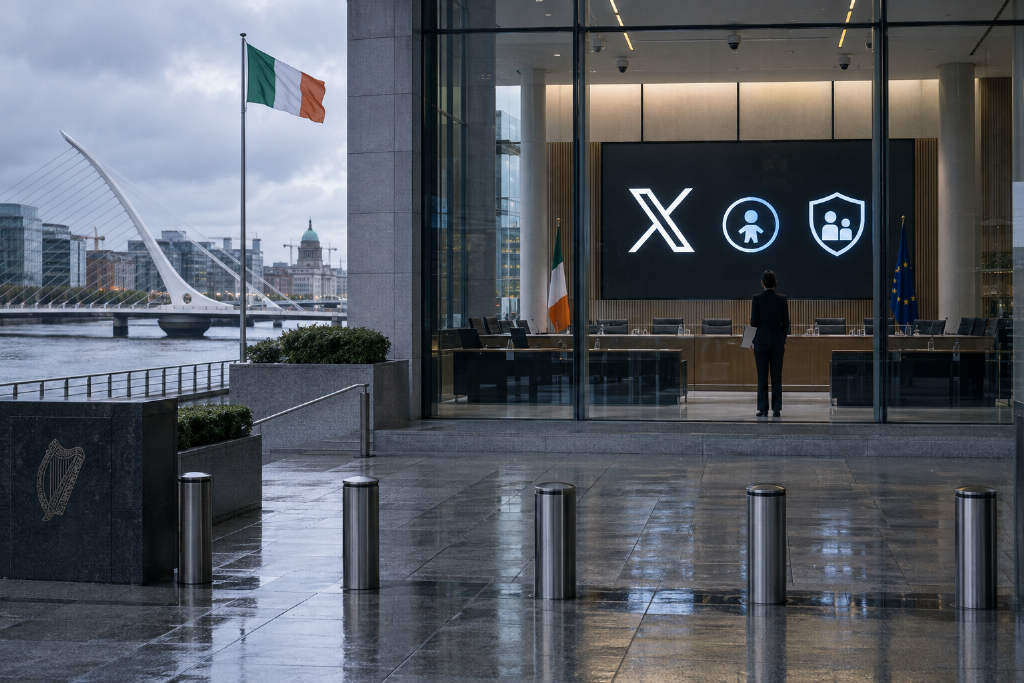
Ireland’s media regulator has opened an investigation into X, the social platform owned by Elon Musk, focusing on whether its age-verification system and parental control tools are working as intended. The inquiry will examine whether X is properly enforcing age-assurance measures and whether users under 16 are adequately protected on a platform that allows adult content. Ireland’s Media Commission said the parental control features on X may fall short in several areas, including minimum requirements, discoverability, and how clearly they are presented to new users. If the platform is found to have breached Irish online safety rules, the regulator could impose a fine of up to €20 million or 10% of the company’s relevant annual revenue. Semafor was cited as the source.

1180
Irish regulator probes X over age checks and parental controls
Utah
1 months agoNews Editor

Utah becomes first U.S. state to require age checks even for VPN-masked visitors

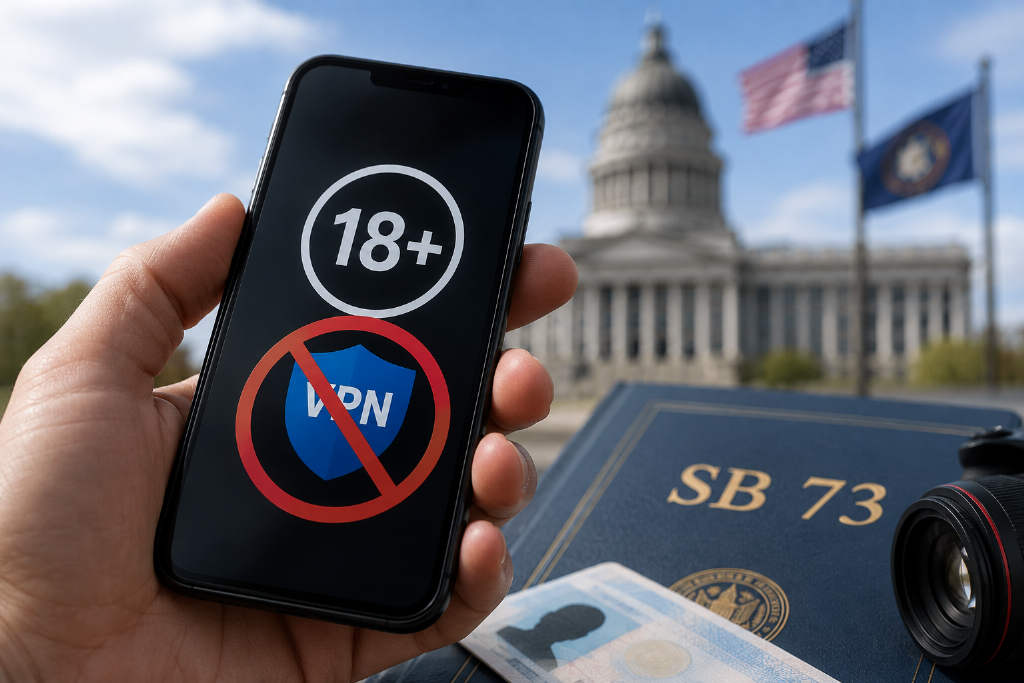
Utah has become the first U.S. state to directly target VPN use in age-verification enforcement, expanding compliance duties for websites that host adult material. Under SB 73, commercial sites that knowingly publish or distribute material harmful to minors must verify the age of Utah visitors when that material makes up more than one-third of their content, even if those users hide their location with VPNs or proxy servers. The law also bars operators from helping users get around the checks, including by offering instructions on how to use VPNs or bypass geoblocks. The measure gives Utah’s Division of Consumer Protection authority to issue administrative fines of up to $2,500 per violation, while courts can impose civil penalties of the same amount and grant other remedies. At the same time, verification providers are barred from retaining identifying data after access is granted. Privacy firm Nym said the law raises a speech issue because it restricts what covered websites can say about privacy tools. The company argued on X that courts have not yet resolved whether such a restriction conflicts with the First Amendment. The Utah law comes as regulators in Brazil, the U.K., and France have also moved to limit VPN-based workarounds tied to platform bans and age-control systems.

1110
Utah becomes first U.S. state to require age checks even for VPN-masked visitors
France
3 months agoNews Editor

France moves to bar under-15s from social media as Taiwan advances age checks and access limits

France’s Senate has passed a bill that would bar children under 15 from using social media, putting the country on track to become another major jurisdiction after Australia to adopt a hard age threshold. Under the reported plan, the law would take effect on Sept. 1, ban new accounts for users under 15, give platforms four additional months to shut existing accounts, and require age-verification systems approved by France’s privacy regulator. Taiwan is not pursuing the same outright ban, but it has begun moving on a different front. On April 21, 2026, the Ministry of Health and Welfare published draft amendments to Article 59 of the Protection of Children and Youths Welfare and Rights Act. The proposal would introduce age-identification mechanisms and allow access-restriction measures for harmful content, with detailed standards to be set by the NCC and the Ministry of Digital Affairs. The draft has already drawn criticism from civil society groups. The Judicial Reform Foundation warned of privacy risks, overly broad legal authorization, and weak due-process protections around network blocking. Amnesty International Taiwan also raised concerns about possible harm to privacy, anonymity and free expression. The debate in Taiwan is no longer only about whether minors should face tighter controls online, but about what kind of enforcement infrastructure is being built and how far it could later be extended.

2030
France moves to bar under-15s from social media as Taiwan advances age checks and access limits
Cardano Foundation
3 months agoNews Editor

Cardano Foundation CEO argues child safety online should not come at the cost of privacy

Cardano Foundation CEO Frederik Gregaard argues that the push to protect minors online is colliding with a long-running weakness in digital identity systems: age checks often rely on vendors that collect and store highly sensitive personal data. In his CoinDesk opinion piece, he points to recent breaches involving identity verification providers, including AU10TIX in 2024 and a Discord age-verification provider in 2025, as evidence that systems built for safety can turn into breach vectors once they depend on stored identity records and third-party operators. The piece arrives as the U.S. House has passed the Kids Internet and Digital Safety Act, or KIDS Act, on June 29 by a 267-117 vote. The bill is now before the Senate, where KOSA co-authors Richard Blumenthal and Marsha Blackburn have rejected the House version and are backing a tougher approach. Gregaard’s argument is that even without an explicit age-verification mandate, liability rules can still push platforms toward collecting more user data. He says a narrower model is possible. Citing Veridian, built by the Cardano Foundation and already used in Utah’s State-Endorsed Digital Identity framework, Gregaard says users should be able to prove whether they are above or below a certain age without disclosing broader identity information. His proposed standard is simple: protect minors, minimize data collection, limit retention, and preserve privacy.

830
Cardano Foundation CEO argues child safety online should not come at the cost of privacy
EU
3 months agoNews Editor

EU digital identity wallet age-check plan faces GitHub backlash over Google and Apple ties

The European Union’s planned age-verification framework for the EU Digital Identity Wallet is drawing mounting opposition after its proposed app and device integrity checks were linked to Google Play Integrity API and Apple App Attestation. An official GitHub discussion has attracted nearly 300 comments, with developers arguing that age checks should not depend on proprietary services controlled by two U.S. technology companies. Critics say the proposal clashes with the wallet specification’s own commitments to interoperability and open standards. They point to the Dutch identity app Yivi as evidence that age verification can work without Google services, and warn that government identity systems should not become dependent on private platform policies, service continuity, or security assumptions outside public control. The debate has widened to include security and inclusion concerns. Researchers cited in the discussion said they were able to reset an app PIN on Android in under two minutes by editing a plain-text preferences file, while others raised concerns about unencrypted personal data storage. Developers also warned that users on de-Googled systems such as GrapheneOS and e/OS could be excluded. Meanwhile, countries have taken different approaches: the Netherlands and Italy currently use Google Play Integrity, while Switzerland opted for Android’s built-in attestation mechanism instead.

2110
EU digital identity wallet age-check plan faces GitHub backlash over Google and Apple ties